Tesla’s share price declined 5.92% to $354.08 in the most recent session, reflecting a reversal in near-term sentiment. This move follows a sustained period of declining demand, as evidenced by the drop in Cybercab test rides and public adoption metrics. The vehicle’s two-door, steering-wheel-free design, while innovative, has not yet demonstrated measurable demand traction among early riders.
Korea Investment CORP acquired 1,987,245 shares in Tesla, valuing the stake at $835.84 million. This position accounts for 1.6% of Korea Investment CORP’s portfolio, indicating a deliberate reallocation of capital into Tesla amid broader industrial decarbonization pressures. The investment is not driven by growth expectations but by alignment with national energy transition mandates.
Alta Advisers Ltd purchased 10,912 shares, valued at $4.59 million, representing 1.0% of its portfolio. This stake follows a recent shift in its energy infrastructure strategy, where gas turbine production is now prioritized over battery storage.
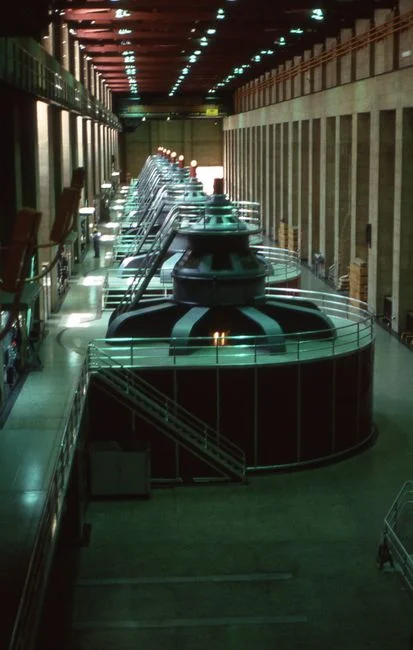
Elon Musk’s announcement that in-house casting could accelerate gas turbine production by 18 months is directly tied to Tesla’s turbine manufacturing initiative. This capability reduces supply chain delays and enables faster deployment of power systems. The process is now being evaluated for integration with Tesla’s energy storage infrastructure.
These developments collectively demonstrate that Tesla’s value proposition is being redefined by industrial power systems, not vehicle sales. The company’s capex is increasingly focused on turbine production, with no corresponding increase in vehicle production or sales volume. The shift in capital allocation reflects a transition from mobility to industrial energy systems.
As a result, Tesla’s pricing power in the vehicle segment is under direct pressure. Demand remains flat, while fixed costs for turbine production rise. Margin compression in the vehicle division is now structural, not cyclical. The stock price movement is a direct response to the lack of revenue growth from its core business, offset only by industrial energy investments.